FDA 21 CFR 175.300 & 178.3800 — Pass
LFGB & BfR tested US · DE · UK · FR · CA
Home / Use Cases / Stirring & Sauteing
Use case 01 · Stirring & Sauteing

Heat withouta scratch.

A non-stick coating has exactly one enemy: the metal tool that slips under it. Acacia is dense, warm and soft enough at the edge to move fast across a hot pan without ever meeting your coating with steel.

BOKALAKA · Solid Acacia · FDA + EU tested The toolsThe setFAQ
Why it works

Dense acacia takes the heat and gives the pan back its life.

Solid acacia handles routine stovetop heat for frying, searing and stirring — the reason a wooden spoon outlasts silicone and survives the heat that softens plastic and splits cheap plywood.

Will wooden utensils scratch a non-stick pan? No. The rounded, hand-sanded edges of solid acacia will not scratch ceramic, coated or stainless cookware the way metal utensils do.
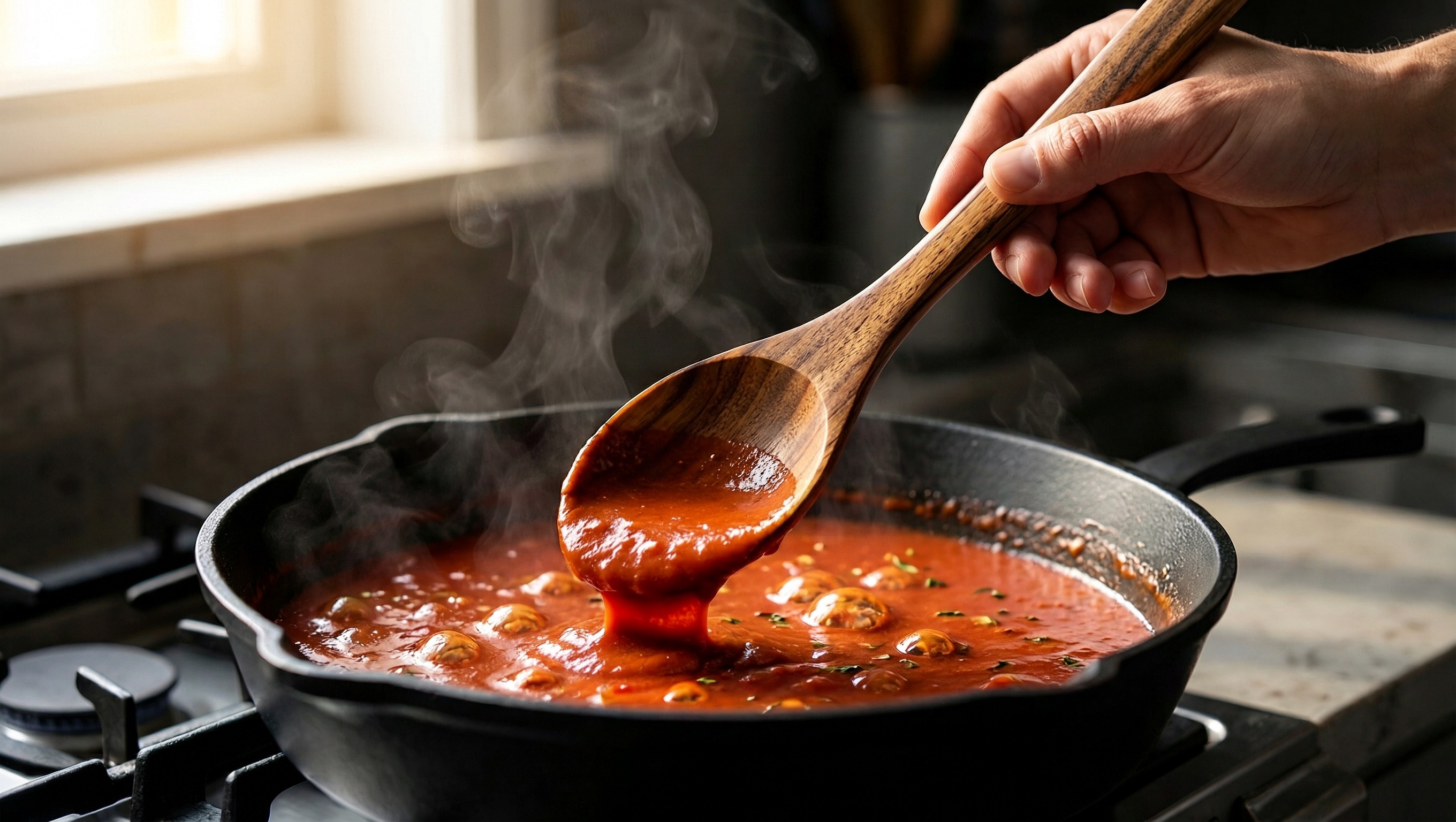
Rounded, hand-sanded edges — no seam left to catch a coating
Holds its shape in a hot pan instead of softening like plastic
One piece of hardwood: no glue, no filler, no melamine core
A hand stirring red tomato sauce in a dark cast-iron pan with a solid acacia wooden spoon
The tools for this job

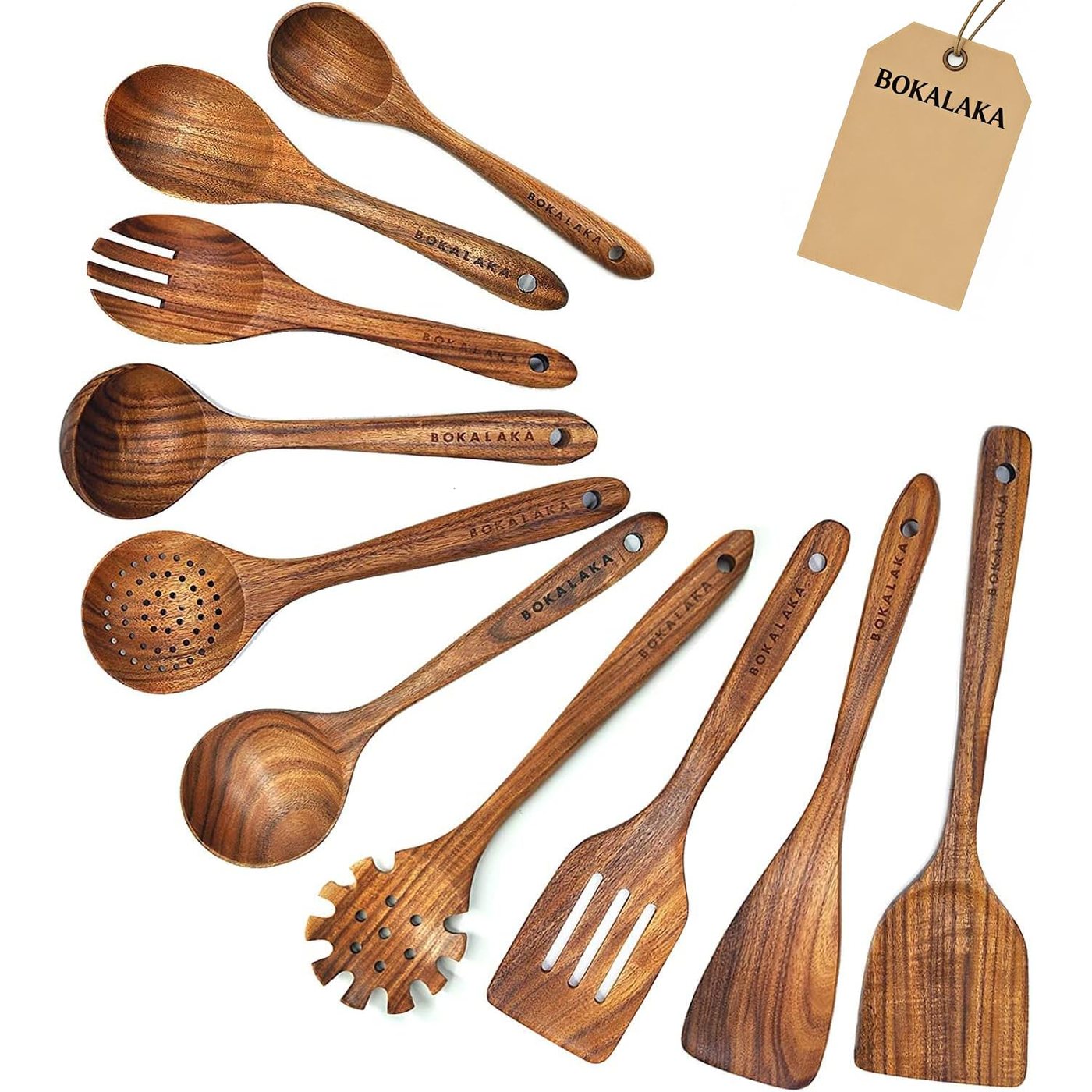
Every piece, photographed on its own

These are the pieces from the the 10-piece set that do this job. Hover to see what each one is for; click any of them for a close-up.

Three things that matter

Why shoppers pick wood here

01No metal edge

Sanded and rounded by hand, so nothing scrapes a ceramic, coated or stainless pan.

02Heat that holds

Dense acacia stands up to stovetop heat that softens plastic and dulls thin wood.

03One solid piece

Carved from a single block — no laminates, no glue lines, no hollow cores.
Questions, answered

Cooking with wooden utensils, answered

Plain answers about material, heat, care and where to buy.

Can I use BOKALAKA utensils on a non-stick pan?
Yes. The rounded, hand-sanded edges of our solid acacia utensils will not scratch ceramic, coated or stainless cookware the way metal utensils can. Acacia handles routine stovetop heat for stirring, sauteing and serving.
Is wood safe to use over high heat?
For routine stovetop heat, yes. Solid acacia is dense and slow-dried, so it holds its shape where plastic would soften and thin laminated wood would split. It is a cooking tool, not a torch: very long, direct flame is not what it is made for.
What kind of spatula should I use for eggs and fish?
Our slotted spatula. The slots let liquid drain back into the pan as you turn, and the thin, flexible edge slides under food instead of tearing it.
Keep going

Other ways to use the set

Ready for your kitchen?

Every set carries the same solid acacia build, the same hand-sanded edges and the same FDA and EU food-contact test reports.

Shop on Amazon →