
The four steps
- Hand wash with mild soap and warm water. A sponge or brush is fine. No soaking, no dish soap left on the wood.
- Dry naturally, standing up. Put the piece upright in a rack so air moves around all of it. Lying it flat in a puddle is what causes splitting.
- Never the dishwasher. The heat cycle dries the wood faster than it can swell, and detergent strips the oil finish. This is the single rule that matters most.
- Re-oil when the surface looks dry or matte. Use a plain food-safe wood oil — nothing else — and wipe the excess off.
The full routine, with the do / do-not list, is on our Care & Use page.
What actually causes cracking
Wood moves with moisture. It swells when it takes on water and shrinks as it dries, and the grain tears when one part of the piece changes faster than the rest. Almost every failure comes from one of four causes:
- Dishwasher heat. The single most common cause. Heat plus detergent plus forced drying is the worst possible combination for the grain.
- Prolonged soaking. A spoon left in a sink of water for hours keeps absorbing water long after you have stopped using it.
- Heat left standing in a hot pan. The bottom of the piece cooks dry while the handle is still wet, and the two pull in opposite directions.
- Dry heat over time. Wood that has never been oiled loses moisture faster and cracks sooner.
Normal wear that is not a defect
A wooden utensil that has been used properly still changes. These are signs of normal use, not manufacturing defects:
- Surface wear, drying or slight cracking from dishwasher use, prolonged soaking, or open flame.
- Normal patina and oil-darkening that develops with regular cooking.
- Natural grain variation, knots and colour differences between pieces — no two pieces of a solid hardwood set are identical.
What is not normal is a piece that arrives cracked, warped, or with a missing part. If that happens, the returns and warranty route covers it.
How to oil a piece properly
Oil the wood, not the cooking. Wipe a small amount of plain food-safe wood oil onto the piece, let it sit for a few minutes, then wipe off everything that has not soaked in. You want the surface sealed, not glossy — excess oil goes rancid and turns the piece sticky long before it helps.
Our pieces ship with a transparent clear food-safe oil finish: no varnish, no paint, no veneer, so the wood itself is what you are seeing and touching.
Our process runs through five steps — selected and dried timber, hand shaping and sanding, the oil finish, piece-by-piece inspection, then protective packing. You can see it on the Our Story page.
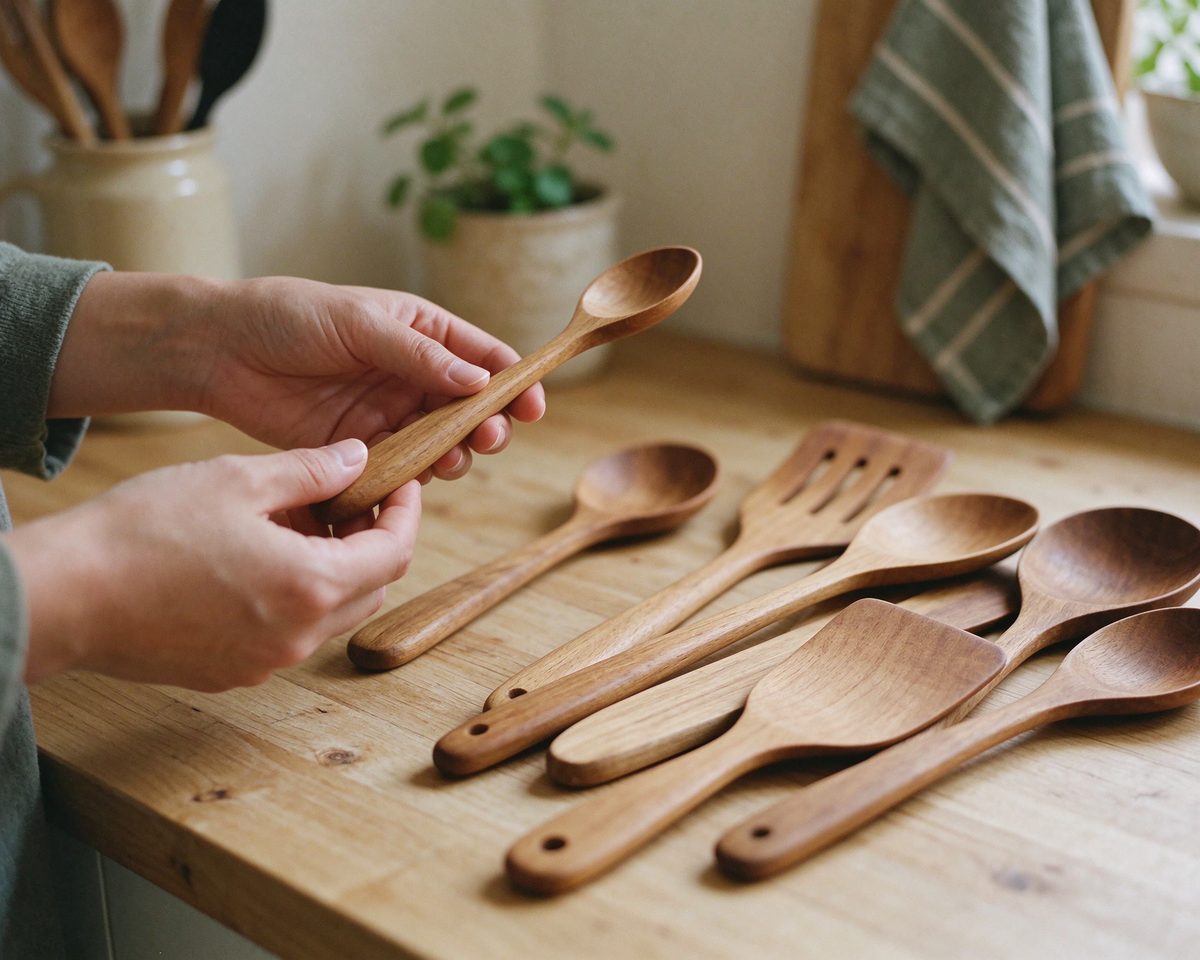
Four steps is the whole job, and they are the difference between a set that lasts a decade and one that cracks in the first year. Hand wash, dry standing up, keep it out of the dishwasher, oil it when it looks dry.