
Two trees share the name
Acacia confusa — small-leaf acacia, also called Taiwan acacia — is the species we use. It grows slowly, and the grain it produces is dense, tight and stable. Acacia auriculiformis, the fast-growing tropical acacia, and soft mixed timber are what most low-cost utensil sets are made from; they sit at roughly 0.55–0.65 g/cm³.
Density is the practical difference. Denser wood dents less, resists softening, holds a sanded edge and shrugs off heat. That is why our sets feel different in the hand and why they cost more — you are paying for the wood, not for a coating.
What the grain looks like
Solid acacia runs from deep brown to red-brown heartwood with wave and tiger figure. Because every piece is cut from a single block, no two are identical: grain pattern, tone and the occasional knot vary from piece to piece and set to set. That variation is not a defect and cannot be engineered out of solid wood — it is the reason to buy wood in the first place.
We photograph and describe the sets as representative rather than identical. You can see the timber selection stage on the Our Story page.
How it is finished
The finish is a transparent clear food-safe oil — nothing else. No varnish, no paint, no veneer, no laminate. What you see is the wood under the oil; what you feel is the wood itself.
We tested it independently: FDA 21 CFR 175.300 and 21 CFR 178.3800, report CTB26061806301C01, both PASS, with sensory taste and odour, PCP and formaldehyde migration all passing. On the EU side, report FTC25216063 covers LFGB §30/31, the BfR recommendation, Regulation (EC) 1935/2004 and Resolution AP(2004)2 — sensory passed, pentachlorophenol was not detected (limit 0.15 mg/kg) and formaldehyde specific migration was not detected (limit 15 mg/kg). Both report numbers are published on the site, and the reports themselves are downloadable.
What it means when you buy it
A solid acacia piece is a piece of hardwood that needs a little attention — hand wash, dry standing up, oil it when it looks dry. In exchange it will outlast a cheap set, keep your coating intact, and age into its own patina instead of delaminating or softening.
Ready to compare the ranges? The seven sets run from a single cooking spoon to the twelve-piece gift box, and every one of them uses the same wood and the same finish.
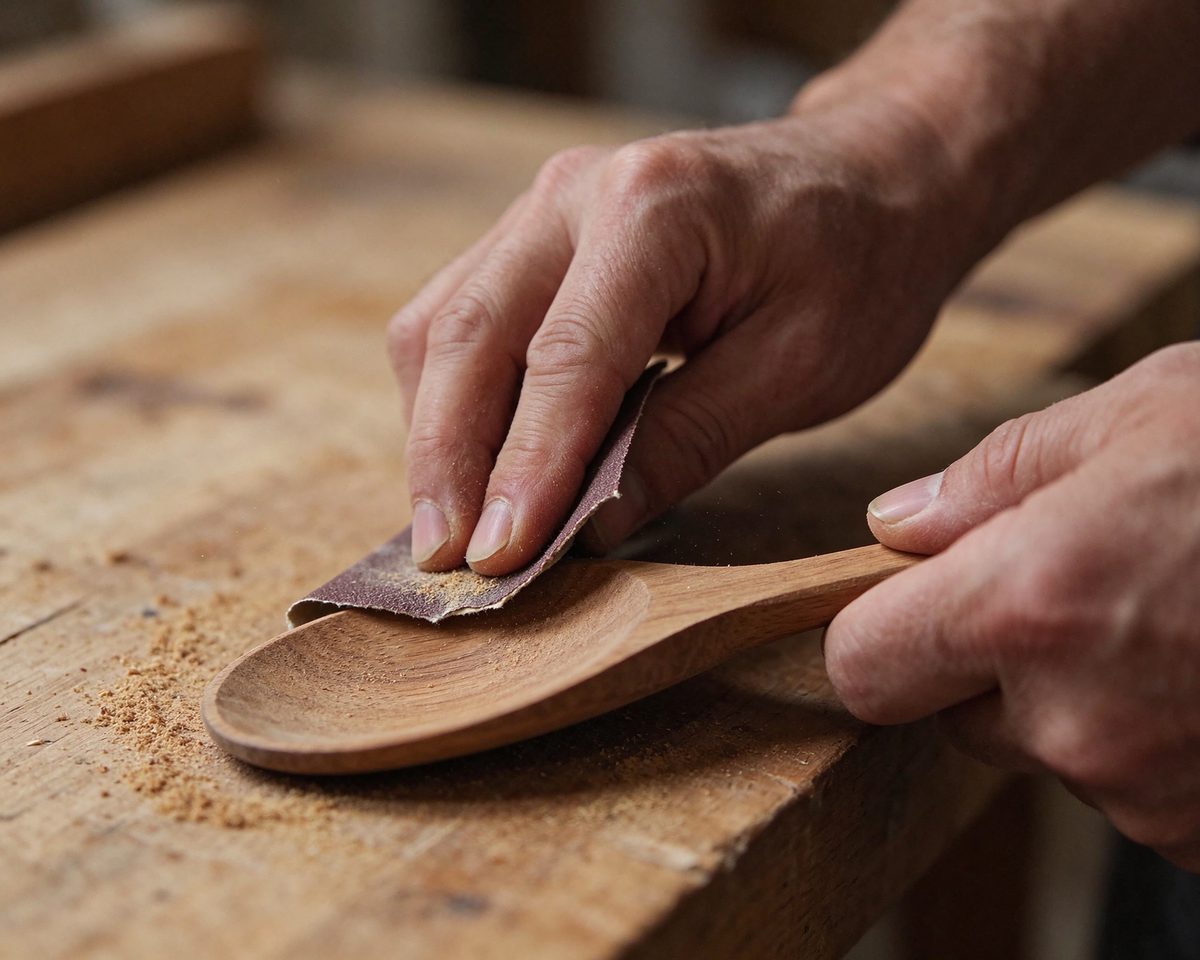
Density is the number that explains the price, and the finish is what explains the feel. Solid Acacia confusa at 0.88-0.96 g/cm3, finished in transparent clear food-safe oil, is a different material from the cheap acacia in most sets - and it behaves like it.